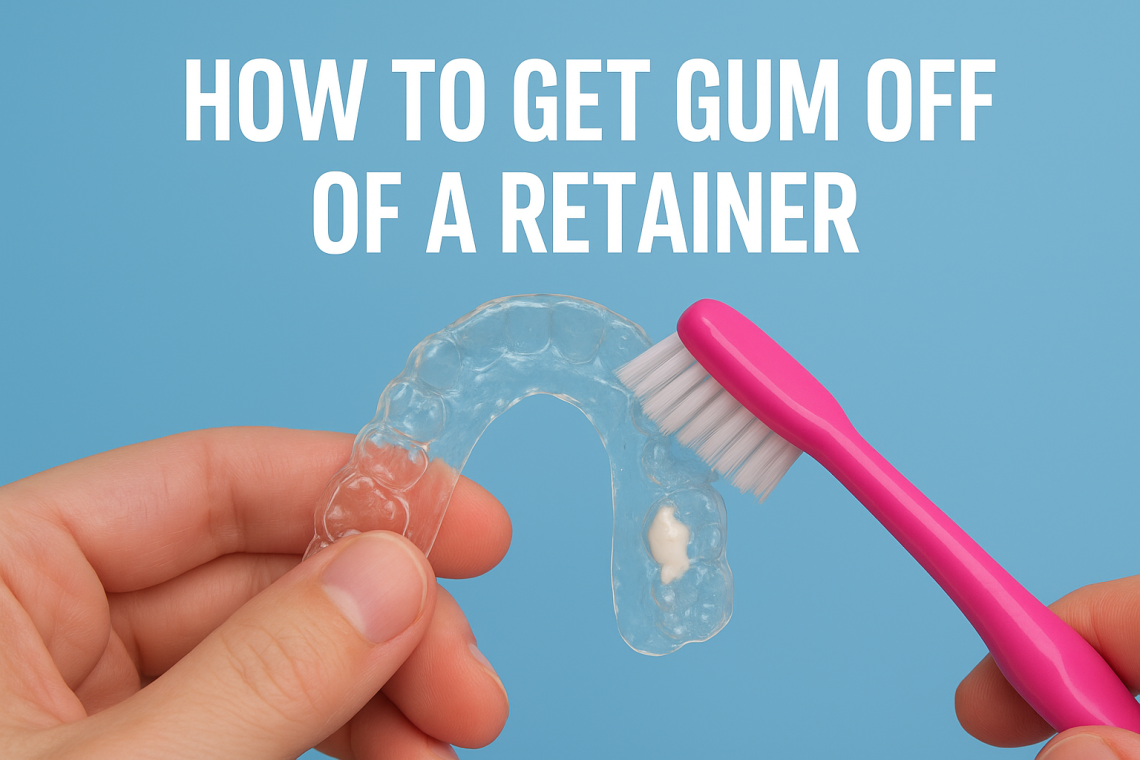
If you’ve ever found yourself wondering how to get gum off a retainer, you are not alone! Chewing gum can easily stick to teeth or dental appliances, leaving you frustrated and unsure how to remove it without damaging your retainer. In this guide, we’ll explore seven effective methods, provide preventive tips, and answer your most common questions.
Gum stuck in braces or a retainer: Is it harmful?
Gum stuck in braces or a retainer can be more than just an inconvenience. It can harbour bacteria, potentially leading to plaque build-up, bad breath, and even cavities if not addressed promptly. While a single instance may not be harmful, repeated incidents can damage your dental appliance or affect oral hygiene.
When gum stays on your retainer for too long, it can trap sugars and bacteria against your teeth, creating the perfect environment for decay. It’s also possible for the gum to warp or scratch plastic retainers if pulled off incorrectly. That’s why it’s important to remove gum gently using safe, dentist-approved methods.

How to Get Gum Off a Retainer: 7 Easy Methods
Method 1: Freezing the Gum Off
Freezing the gum hardens it, making removal easier. Simply place your retainer in a clean, small resealable bag and pop it in the freezer for about 30 minutes. Once firm, gently scrape off the gum using a soft toothbrush or dental pick. This method is especially effective for stubborn gum stuck in braces.
Tip: The zip-lock bag or small airtight container where the retainer is placed must be clean. This prevents contamination from other food items in your freezer. If your retainer is made from clear plastic, avoid bending or twisting it while frozen — the material can become temporarily brittle. Wait a few minutes after removing it from the freezer before cleaning.
Method 2: Using Peanut Butter or Oil
Oils break down the sticky texture of gum. Apply a small amount of peanut butter or olive oil to the affected area and leave it for a few minutes. Then, gently scrub with a toothbrush. After brushing off the gum, wash your retainer with mild soap and warm water to remove any oily film. Be sure to rinse thoroughly afterwards to avoid residue build-up. Avoid soaking retainers in oil, as it can damage certain acrylic materials over time. This method works well for those asking how to manage chewing gum sticking to teeth or retainers.
Method 3: Vinegar Soak
Vinegar softens gum effectively. Mix equal parts of white vinegar and warm water, then soak your retainer for 5–10 minutes. Use a soft brush to remove the gum gently. This natural approach avoids harsh chemicals while being effective for both retainers and braces.
Tip: Do not soak metal retainers or those with soldered joints in vinegar too often, as repeated exposure may dull metal parts. For plastic retainers, vinegar is a safe, budget-friendly cleaner. After cleaning, rinse thoroughly under cool running water to remove the smell and taste.
Method 4: Toothpaste Scrubbing
Non-abrasive toothpaste can aid in removing gum. Apply a small amount to the gum area and scrub gently with a soft-bristled toothbrush. Repeat if necessary. Toothpaste also helps restore the retainer’s shine and removes sticky residue.
Tip: Choose a toothpaste that does not contain whitening or abrasive particles. Gel-based or fluoride toothpastes are best for retainers. Brush gently using circular motions for 2–3 minutes. Rinse thoroughly.
Method 5: Boiling Water
Boiling water can loosen gum, but caution is required to avoid warping plastic retainers. Pour hot (not boiling) water over the gum area for a few seconds, then use a toothbrush to remove softened gum. Avoid submerging the entire retainer if it’s made of acrylic or contains metal parts.
Tip: Boil the water first, then let it cool for about 30 seconds before pouring. Use a cup or small bowl to control the stream, focusing only on the affected section. Never leave the retainer in hot water for more than 10 seconds, and immediately rinse with cold water afterward to stabilise the material.
Method 6: Dental Tools or Floss
Use dental floss or a specialised dental pick to dislodge gum from small crevices. Gently work the floss between the gum and retainer, moving it back and forth. This method is ideal for removing gum stuck in braces and avoids using harsh substances.
Tip: Avoid using sharp household objects like needles or pins. They can scratch the retainer surface, leading to bacterial accumulation. Dental picks and interdental brushes are safer, as they are designed for oral use. If gum remains stuck in the wire or hinge areas, soak the retainer in warm water first to loosen it.
Method 7: Commercial Retainer Cleaners
There are many commercially available retainer cleaners designed to remove sticky substances and bacteria. Follow the instructions carefully. These cleaners often combine enzymatic action with mild abrasives, making them safe and effective.
How to choose the right cleaner: To remove gum stuck in braces, look for products labelled safe for “clear retainers” or “orthodontic appliances.” Avoid tablets meant for dentures unless stated otherwise, as they may be too harsh. A weekly soak in a commercial cleaner can also help prevent gum residue from bonding to the surface in the future.
Preventive Tips for Gum Sticking to Retainers
Preventive care is always better than treatment. Here’s a quick table summarising practical steps:
| Tip | Benefit | Notes |
|---|---|---|
| Avoid chewing gum while wearing retainers | Prevents gum from sticking | Especially important for plastic or metal retainers |
| Clean retainers regularly | Reduces residue build-up | Use soft brushes and recommended cleaners |
| Store in a case when not in use | Protects from accidental gum contact | Keep away from pets and children |
| Rinse your mouth after meals | Minimises sticky residue | Helps prevent plaque and food sticking |
| Handle retainers with clean hands | Prevents cross-contamination | Wash hands before and after touching your appliance |
Being mindful of what you eat or chew can prevent a lot of accidents like gum stuck in braces. Sugar-free mints or cold water rinses are better alternatives to gum if you need to freshen your breath. A consistent cleaning routine can also extend your retainer’s life and keep your smile healthy.
Conclusion
Removing gum from your retainer does not have to be stressful. From freezing to commercial cleaners, the methods outlined above provide safe and practical solutions. Remember, preventive measures are key to avoiding repeated frustration. Following these tips ensures your retainer remains clean, functional, and free from sticky complications like gum stuck in braces or other appliances.
Consistency is the secret. The more regularly you clean your retainer, the easier it is to handle unexpected messes like gum. And if you’re unsure or the gum doesn’t come off easily, it’s best to take it to your dentist or orthodontist for professional cleaning rather than risk damaging the appliance.
Frequently Asked Questions
1. Can gum damage my retainer?
Yes, gum can adhere to the surface and, if left untreated, may cause staining or degrade certain plastics over time. Prompt removal using one of the safe methods outlined above is recommended.
2. Is it safe to use hot water to remove gum?
Hot water can soften gum, but extreme caution is needed. Avoid boiling water as it may warp plastic retainers or damage metal components. Always use warm or hot, not boiling, water.
3. Can you chew gum with an expander?
It is generally advised against. Gum can stick to the expander, impede its function, and make cleaning difficult. Stick to soft foods until the appliance is removed or adjusted by your orthodontist.
4. What’s the quickest method to remove gum from a retainer?
Freezing the retainer for 30 minutes followed by gentle scraping is often the fastest and most effective method for removing stubborn gum.
5. Are commercial retainer cleaners more effective than home remedies?
Commercial cleaners are formulated specifically for dental appliances and often remove gum and bacteria more efficiently than home remedies. However, home methods like freezing or using vinegar can work effectively if applied correctly.
References
-
“How to Clean Your Retainer at Home.” American Association of Orthodontists, 2025. Available at https://aaoinfo.org/whats-trending/how-to-clean-your-retainer/.
-
“Different Ways to Clean Your Retainer, Aligner or Nightguard.” Polident, 2025. Available at https://www.polident.com/en-my/removables/living-with-a-removable-appliance/how-to-clean-retainer-aligner-or-nightguard/.
-
“Caring for Your Clear Removable Retainer.” Dental Designs Singapore, 2025. Available at https://www.dentaldesigns.com.sg/en-sg/articles/caring-for-your-clear-removable-retainer.
-
“How to Clean Retainers: Tips and Tricks.” Healthline, 2025. Available at https://www.healthline.com/health/dental-and-oral-health/how-to-clean-retainers.
-
Penn Pacific Dental Center https://www.ppdental.com.sg/post/dental-implants-your-path-to-a-confident-smile